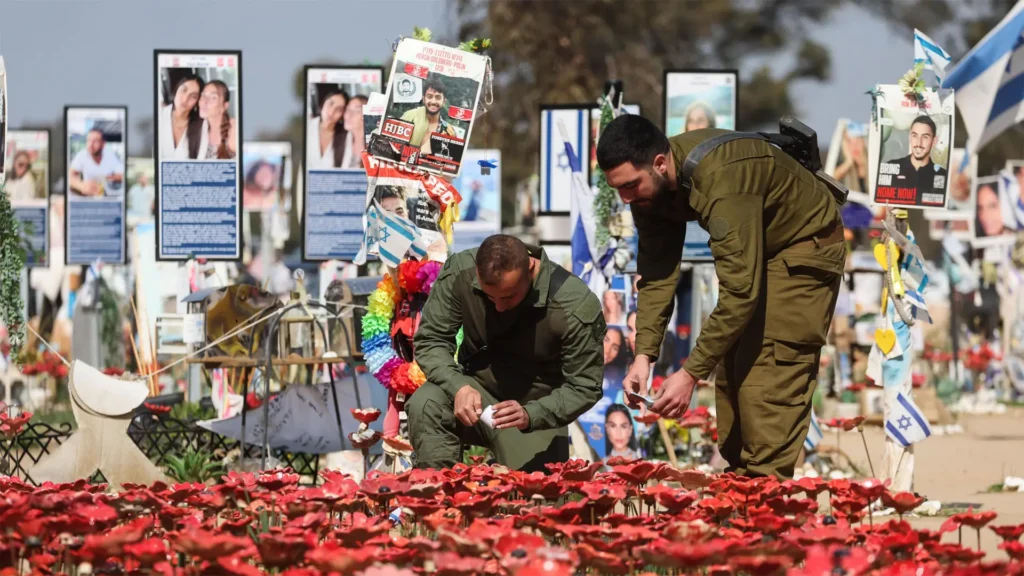
On October 7, 2023, Hamas launched its most successful attack against Israel. The fragile calm that had existed in the Gaza Strip was shattered by Hamas’s elaborate plan to invade Israel, kill as many Jews as possible, loot, steal, and kidnap every Israeli they could—both the living and the dead. The launch of more than 5,000 rockets against Israel was followed by the infiltration of thousands of Hamas and Islamic Jihad militants into Israeli territory, causing the largest massacre of Jews in a single day since the Holocaust and taking 251 Israelis to Gaza in an act of cruelty, defiance, and provocation.
Since that day, the government in Jerusalem has had to fight five wars: one against its direct enemies—from Hamas to Iran, including Hezbollah, Syria, Iraq, and the Houthis in Yemen; a second against its supposed allies, from Joe Biden’s United States to various European governments, who have sought to limit Israel’s freedom of action; a third, strategic in nature, between political leadership and military commanders reluctant to achieve the government’s stated military objectives; a fourth, domestic, between Prime Minister Benjamin Netanyahu and an opposition that has used the war to pursue its own political goals; and a fifth, against a global campaign of delegitimization, largely fueled by Hamas’s successful propaganda and the world’s lack of interest in understanding the truth of the conflict.
In a new edition of Ideas by the Disenso Foundation, Rafael Bardají—who holds a degree in Political Science and Sociology from the Complutense University of Madrid, and is a specialist in international politics, security, and defense—offers a well-documented and detailed analysis of these overlapping wars that Israel has had to wage over the past two years. Furthermore, regardless of any peace plan for Gaza, he examines the challenges that the country still faces ahead.